
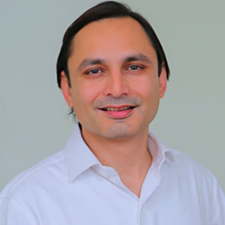
In a wide ranging conversation about entrepreneurship, technology, and resilience, Bykea founder and chief executive Muneeb Maayr reflected on the unlikely path that led him to build one of Pakistan’s most recognizable mobility platforms.
Maayr began with a personal story about identity. His first name, he explained, came from his grandfather. His family name is technically Meyer Van Haas, though it was rarely used until his brother formally adopted the surname Meyer. When Maayr later moved to Karachi to build a startup, he also adopted the name Meyer professionally. The change coincided with a turning point in his life as he transitioned from corporate work to entrepreneurship.
Before founding startups, Maayr spent several years helping establish the Islamabad operations of SNL Financial, a data company that provided industry research and public company comparables to financial institutions in the United States. During those years he and a colleague began experimenting with a side project that resembled an eBay style marketplace. While seeking investment for that idea they encountered Rocket Internet, the German startup builder known for replicating successful technology models across emerging markets.
Rocket Internet declined to invest in the marketplace concept but proposed something different. Instead of building an auction platform they wanted to launch a fashion e commerce company modeled after Zappos in Pakistan. Maayr agreed to lead the venture. The role required him to move to Karachi and effectively run the company as a chief executive under Rocket Internet’s structure.
At the time Maayr had been considering business school. Instead he viewed the startup opportunity as an accelerated business education that would pay him while he learned. The experience gave him a firsthand understanding of how global technology models could be adapted to emerging markets.
Years later he would apply those lessons to a more ambitious idea. Bykea was founded to address a uniquely Pakistani transportation challenge. In dense cities such as Karachi, motorcycles are far more common and affordable than cars. Maayr realized that a mobility platform centered on motorbikes could reach a far larger segment of the population than traditional ride hailing services built around cars.
Building the company was far from easy. Over time Bykea found itself competing with some of the most technologically advanced mobility companies in the world. Uber entered the Pakistani market and later acquired Careem, a regional ride hailing leader that had become the Middle East’s first technology unicorn. Russian technology companies such as Yandex also deployed capital and technology into the sector. Another competitor, InDrive, brought international investment as well.
Despite the intensity of the competition, Bykea has managed to hold a leading position in motorbike based mobility. Maayr attributes the company’s survival to a disciplined approach to capital and strategy. Over the years the company raised approximately thirty million dollars in funding, but he emphasizes that venture capital alone cannot sustain a business indefinitely.
For a long period Bykea relied on investor funding to grow its network. Eventually the leadership team recognized that they could not win a permanent subsidy war against better funded global companies. Instead they shifted their focus to capital efficiency and relentless incremental improvements to the product.
The turnaround occurred gradually over the past year and a half. Bykea moved from heavy losses toward profitability by improving operations and focusing narrowly on mobility rather than chasing unrelated business ideas. Many startups, Maayr observed, become distracted by expanding into entirely new categories before their core product has matured. Bykea resisted that temptation.
The technology itself also presented a formidable challenge. Unlike a simple e commerce website that displays a catalog of products, a ride hailing platform must constantly balance supply and demand in real time. The system has to understand where drivers are located, where riders are requesting trips, and how to match both sides efficiently. Achieving that without excessive financial incentives requires complex software engineering.
Even after years of building the platform, expansion into other countries remains difficult. Mobility markets require enormous capital to launch in new regions. Maayr believes that if Bykea expands internationally in the future it will most likely do so by licensing or exporting its technology rather than attempting to deploy fleets in new markets directly.
The conversation then turned to Maayr’s early career on Wall Street. After graduating from college he joined the analyst program at Bear Stearns, which at the time was one of the most prominent investment banks in the United States. Although he spent only a short period there, the experience left a lasting impression.
Investment banking taught him how to work under intense pressure, pay close attention to detail, and compete at a high level. Those skills proved invaluable later when navigating the chaotic environment of startups. Maayr emphasized that the popular image of startups as relaxed workplaces filled with bean bags and casual schedules is largely a myth. In reality building a technology company demands extraordinary stamina and discipline.
He also warned that the startup ecosystem has been romanticized during the past decade. Media coverage often focuses on spectacular exits and billion dollar valuations, creating the illusion that success is common. In reality most startups never reach a meaningful liquidity event. Many founders devote years of their lives to ventures that ultimately produce little financial reward.
Despite these risks Maayr remains committed to building in Pakistan. He believes the country’s economic challenges also contain long term opportunities. High inflation and low household incomes have constrained consumer spending, which directly affects businesses like ride hailing. Yet he argues that structural changes could eventually strengthen the economy.
One of the most important shifts would be greater participation of women in the workforce. Pakistan’s urban households often contain six family members but only one or two earners. Increasing female participation in employment would raise household income and expand consumer demand across the economy. Over time that shift could create stronger markets for services such as transportation and digital commerce.
Within Bykea’s platform Maayr has also experimented with innovative approaches to pricing. Rather than relying exclusively on algorithmic fares set by the company, the platform allows riders and drivers to negotiate prices. The model resembles an auction system similar to eBay where both sides bid toward a mutually acceptable fare. This mechanism helps the platform adapt to inflation and local market conditions without forcing a fixed price structure on users.
Looking ahead Maayr imagines Bykea evolving beyond transportation. In his long term vision the platform could become an essential urban utility application for Pakistani consumers. Mobility would remain a core function, but the platform might also support local commerce, logistics, and financial services such as lending or buy now pay later offerings.
Ultimately his goal is not merely to build a company but to create a lasting national brand. Many entrepreneurs focus primarily on achieving a financial exit. Maayr’s aspiration is different. He wants Bykea to endure as an institution that continues serving Pakistan long after the current generation of founders has moved on.
The discussion concluded on a more personal note. When asked about the qualities he values most in founders he invests in, Maayr identified two traits above all others. The first is grit, the determination to continue building despite uncertainty and setbacks. The second is rigorous attention to numbers and operational details. A founder who cannot explain the economics of their business, he believes, has not yet thought deeply enough about its viability.
For interviewers and aspiring communicators he offered practical advice as well. Confidence in public speaking often comes from practice and self observation. Recording oneself or speaking in front of a mirror can reveal subtle habits and expressions that improve with awareness.
For Maayr the entrepreneurial journey remains unfinished. Bykea continues to compete in one of the most challenging startup environments in the world. Yet the company’s survival against global giants demonstrates the power of persistence, careful execution, and a deep understanding of local markets.
In Pakistan’s rapidly evolving technology ecosystem, Bykea stands as a reminder that global scale innovation can emerge from unlikely places when founders combine ambition with discipline and resilience.